
Images generated via the plugin’s AI module are received directly from the provider’s model and saved locally into a temporary folder inside WordPress’ uploads directory – they are not routed through any other service. From the saved local directory, generated images can be viewed and uploaded into WordPress’ media library as a standard WordPress media asset. The saved responses can also be deleted.
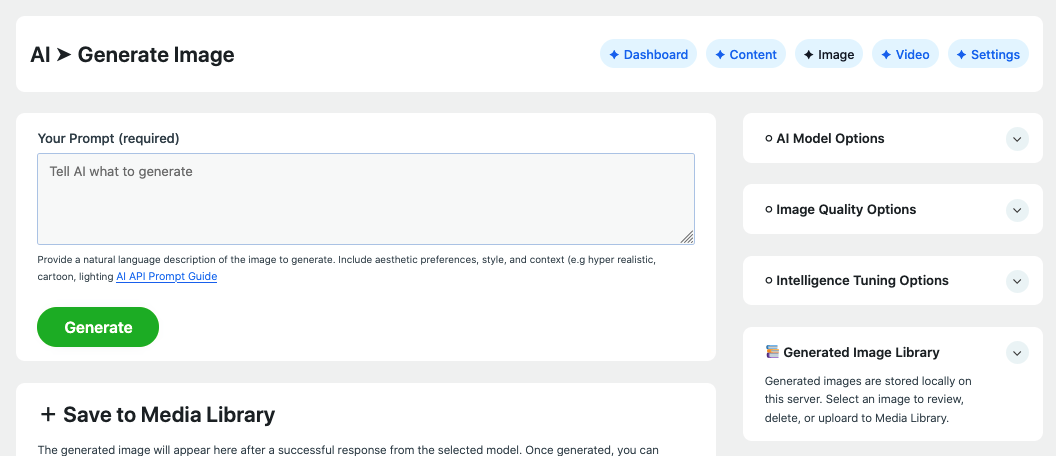
User controls and configuration options are grouped into six categories on the image generation page:
1. User Prompt
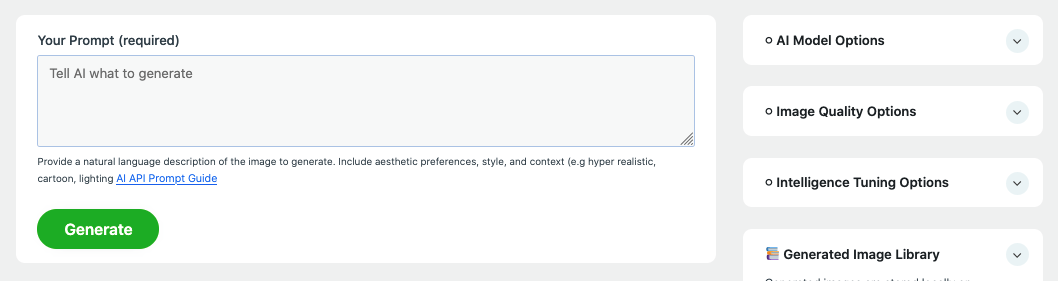
The prompt field is available for composing instruction for the AI model to generate images as required.
2. AI Model Options
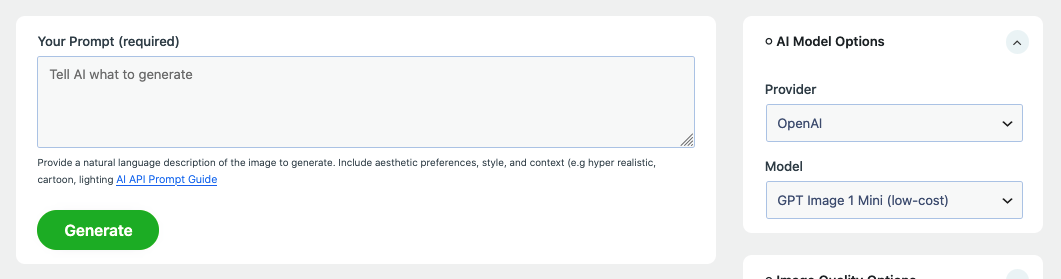
Select a provider, and a LLM for the image generation. Note that some models may have documented features and characteristics that makes them more appealing for generating specific a types of images. Information about LLM characteristics and features are available in the model’s documentation, which is usually accessible via provider’s API dashboard.
3. Image Output Options
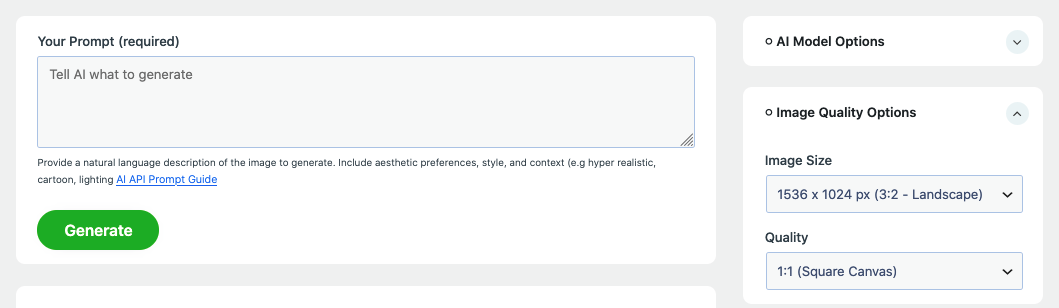
Depending on the selected provider and model, options in this section include image resolution, quality, aspect ration among others.
4. Intelligence Tuning Options
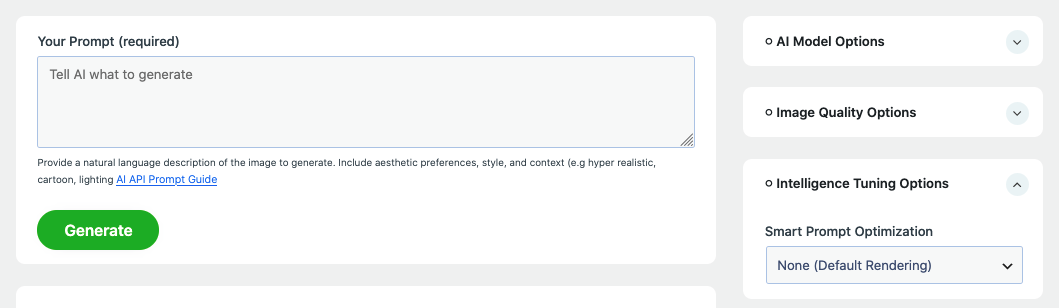
These options are completely optional and can be ignored by some model. When recognized and used by the model, the selection option adds a preset instructions to user’s prompt – allowing the model to generate the image using specific criteria. For example, the image could be encoded as a cartoon, anime (manga), cinematic among others.
5. Generated Image Library
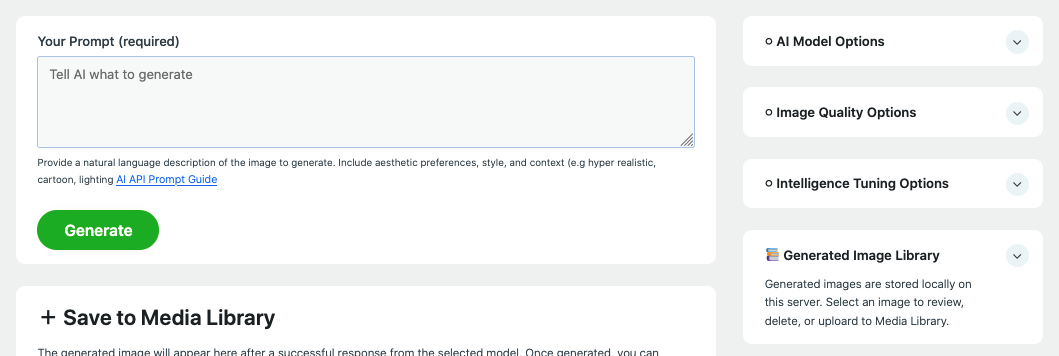
Generated images are automatically saved locally and are available for future review where the user who generated an image may review, delete, and upload the image into WordPress’ media library for sitewide access.
6. Save to Media Library
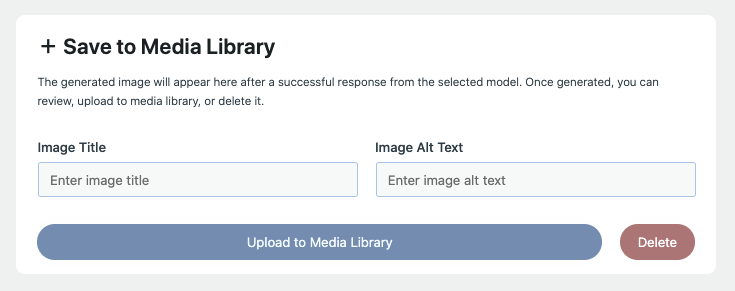
This section allow the user to upload a generated image into WordPress media library. When an image is received from the provider’s API, the image is displayed instantly in the preview area. And a “Upload to Media Library” button which uploads the image to the Media library, when clicked. The section is also used to render images that were previously saved in the temporary location inside WordPress uploads folder.